

There is no business in the world that cares more about delivering a high-quality whole-body screening.
Advanced whole-body screening is a deeply qualitative practice. The machine matters. The protocol matters. The radiologist matters. The reporting matters. The research matters. On every quality dimension that compounds into the accuracy of your result, Prenuvo leads.
A $999 whole-body MRI and a $2,499 whole-body MRI can be clinically incomparable.
There is no accreditation body for whole-body screening MRI. No mandatory protocol standard. No requirement to publish outcome data. That is why you need to look past the price and the marketing and ask the dimensions that matter. We are going to walk you through the seven dimensions that the best radiologists in the world use to judge an imaging practice — and we are going to show you where we stand on each one.

A dedicated group of 200+ medical professionals, not just AI
Improving your health is a human endeavour. A test requires interpretation. Interpretation requires contextualization. Context is crafted into actions. The right actions lead to better outcomes.
Prenuvo
The Prenuvo Medical Group includes more than 150 mid- to late-career board-certified radiologists, preventive-health physicians, MRI technologists and nurse practitioners, many trained at leading institutions like Harvard, Stanford, Northwestern, Hopkins, Emory and more.
Every one of them could have the pick of places to work. They chose whole-body screening at Prenuvo because they believe it is the future of healthcare.
This team works to tailor a screening that is both medically accurate and also as humanizing as possible, something our medical system lacks. Your screening results will be explained by a medical practitioner not an AI.
The group is led by Dr Dan Durand, a Hopkins trained radiologist who was Chief Clinical Officer of Lifebridge, an east coast health system.
Most others
Many competitors aren’t even medical groups - they are simply a marketing company to pass you onto an outpatient imaging facility to do all the work.
Few have clinical staff dedicated full-time to whole-body screening.
Many make it hard for you to even talk to a medical practitioner.
Many others aren’t even led by radiologists.
An incredible in-clinic experience
Whole body screening can be a little anxiety inducing. Some people might be claustrophobic. A calming, unhurried environment can make all the difference in obtaining the best images possible in as comfortable a way as possible.
Prenuvo
Unhurried experience. You are not an insurance number on a conveyor belt.
Wide-open bore MRIs, in-bore TV and audio, HealthTunes MusicMedicine, and your choice of show or playlist.
Memory-foam MRI beds and light MRI coils, the most comfortable MRI experience available.
Concierge-level facilities in every clinic.
Industry-leading NPS across thousands of reviews.
The Prenuvo Medical Group is led by Dr. Daniel Durand, a John Hopkins trained radiologist who was Chief Clinical Officer of Lifebridge. Learn more about the Prenuvo Medical Group
Most others
A standard outpatient imaging center — the same environment as a sick-care CT scan.
Rushed appointments, no amenities, and no time to ask questions.
Powerful, purpose-built MRI hardware
Not every MRI machine is the same. Field strength, coil design, bore diameter, and software age directly determine how many images and at what quality you can acquire them in a fixed amount of time. Whole-body imaging, in particular, punishes machines that were designed for single-body part clinical workflows.
Prenuvo
High-end, custom-built research-grade MRI hardware loaded with the latest generation of MRI sequences.
Minute-for-minute, Prenuvo machines acquire more high-quality images and are therefore able to be diagnostic for more conditions than those performed on a standard MRI machine.
Supercharged with k-space acceleration that speeds acquisition further without compromising image quality.
Most others
Standard outpatient-imaging MRIs, sometimes small-bore claustrophobic machines, sometimes 3T (which produces imaging artefacts over large fields of view and is unsuited for whole-body imaging), sometimes twenty years old.
Out-of-the-box imaging sequences, no deep understanding of MRI physics.
Hand-tuned acquisition protocols
The protocol is how the machine is told what to look at. A good protocol maximizes sensitivity (catching what is there), specificity (not mistaking what isn't), and efficiency. (respecting your time in the MRI). It is also update-able, which means the practices that iterate improve every month.
Prenuvo
Clinician-led acquisition protocols designed for broad coverage at high sensitivity and specificity.
Fully ONCO-RADS compliant (the international standard for cancer-relevant whole-body reporting that Prenuvo helped establish).
Heavy use of diffusion-weighted imaging (DWI) — essential for effective diagnosis of cancer and a wide range of other conditions.
A philosophy of continuous improvement: every month our protocol changes, a little faster or a little more powerful.
Most others
Typically not ONCO-RADS compliant.
Forced to cut corners on image acquisition because of limits created by their hardware.
Takes little DWI imaging as this is taxing for most standard MRI machines.
Thoughtful structured reporting
A high-quality whole-body screening produces more than four thousand images. How those images become a report is a source of tremendous variance in medical accuracy. Structured reporting produces consistency patient-to-patient, year-to-year, and radiologist-to-radiologist. Unstructured reporting produces the exact opposite.
Prenuvo
Deep reader training on reporting across 5,000+ images per study.
Proprietary structured-reporting approach that ensures standards are followed and that language is tailored to a screening context (health-positive) rather than a diagnostic context (scary).
A level of quality assurance that exceeds ACR standards, with a dedicated quality officer who continuously improves the medical service.
Whole-body reading is the majority of what every Prenuvo-affiliated radiologist does — not a side-gig.
Most others
Whole-body reading is a side activity; the radiologist primarily reads insurance-funded single-part scans and does not develop the depth of expertise that whole-body demands.
Unstructured reading leads to inconsistencies in longitudinal imaging, and to variance between radiologists on how to call the same finding.
More experience than any other whole-body screening company in the world
Radiologic judgment is a function of case volume. The more scans a practice reads, the sharper its eye becomes for what is normal in a screened as opposed to the “sick” population — and the finer its calibration for when to act, when to watch, and when to reassure.
Prenuvo
170,000+ whole-body screenings performed.
Trusted by more physicians to refer their patients than any other whole-body provider.
More clinical integrations with specialists for referral than any other whole-body provider.
Active across three continents.
Most others
Small shops with "hundreds or thousands" of scans of experience.
Most rads do not read enough scans to develop good approaches and muscle memory for whole body reading in a screening context.
Limited to no clinical integration beyond handing the patient a PDF.
The only whole-body screening practice conducting clinical research at scale
Whole-body screening is an emerging field. The practices that invest in generating evidence are the practices that earn the right to define the standard. The practices that do not, are operating downstream of a definition someone else will eventually write.
Prenuvo
50+ peer-reviewed papers and abstracts, including in leading journals.
Research-validated an observed ~99.8% negative predictive performance for no interval cancer diagnosis after 12-months among individuals who did not undergo biopsy after a whole-body MRI — giving patients and physicians genuine confidence in a scan report negative for oncologically-relevant findings. And where findings do result in biopsy, a 50% positive biopsy rate is comparable to dedicated single-organ diagnostics
The Hercules prospective study is actively generating the controlled evidence that will shape the category.
Most others
Little to no large scale clinical research. Marketing language instead of citations.
A dedicated group of 200+ medical professionals, not just AI
Improving your health is a human endeavour. A test requires interpretation. Interpretation requires contextualization. Context is crafted into actions. The right actions lead to better outcomes.
Prenuvo
The Prenuvo Medical Group includes more than 150 mid- to late-career board-certified radiologists, preventive-health physicians, MRI technologists and nurse practitioners, many trained at leading institutions like Harvard, Stanford, Northwestern, Hopkins, Emory and more.
Every one of them could have the pick of places to work. They chose whole-body screening at Prenuvo because they believe it is the future of healthcare.
This team works to tailor a screening that is both medically accurate and also as humanizing as possible, something our medical system lacks. Your screening results will be explained by a medical practitioner not an AI.
The group is led by Dr Dan Durand, a Hopkins trained radiologist who was Chief Clinical Officer of Lifebridge, an east coast health system.
Most others
Many competitors aren’t even medical groups - they are simply a marketing company to pass you onto an outpatient imaging facility to do all the work.
Few have clinical staff dedicated full-time to whole-body screening.
Many make it hard for you to even talk to a medical practitioner.
Many others aren’t even led by radiologists.
An incredible in-clinic experience
Whole body screening can be a little anxiety inducing. Some people might be claustrophobic. A calming, unhurried environment can make all the difference in obtaining the best images possible in as comfortable a way as possible.
Prenuvo
Unhurried experience. You are not an insurance number on a conveyor belt.
Wide-open bore MRIs, in-bore TV and audio, HealthTunes MusicMedicine, and your choice of show or playlist.
Memory-foam MRI beds and light MRI coils, the most comfortable MRI experience available.
Concierge-level facilities in every clinic.
Industry-leading NPS across thousands of reviews.
The Prenuvo Medical Group is led by Dr. Daniel Durand, a John Hopkins trained radiologist who was Chief Clinical Officer of Lifebridge. Learn more about the Prenuvo Medical Group
Most others
A standard outpatient imaging center — the same environment as a sick-care CT scan.
Rushed appointments, no amenities, and no time to ask questions.
Powerful, purpose-built MRI hardware
Not every MRI machine is the same. Field strength, coil design, bore diameter, and software age directly determine how many images and at what quality you can acquire them in a fixed amount of time. Whole-body imaging, in particular, punishes machines that were designed for single-body part clinical workflows.
Prenuvo
High-end, custom-built research-grade MRI hardware loaded with the latest generation of MRI sequences.
Minute-for-minute, Prenuvo machines acquire more high-quality images and are therefore able to be diagnostic for more conditions than those performed on a standard MRI machine.
Supercharged with k-space acceleration that speeds acquisition further without compromising image quality.
Most others
Standard outpatient-imaging MRIs, sometimes small-bore claustrophobic machines, sometimes 3T (which produces imaging artefacts over large fields of view and is unsuited for whole-body imaging), sometimes twenty years old.
Out-of-the-box imaging sequences, no deep understanding of MRI physics.
Hand-tuned acquisition protocols
The protocol is how the machine is told what to look at. A good protocol maximizes sensitivity (catching what is there), specificity (not mistaking what isn't), and efficiency. (respecting your time in the MRI). It is also update-able, which means the practices that iterate improve every month.
Prenuvo
Clinician-led acquisition protocols designed for broad coverage at high sensitivity and specificity.
Fully ONCO-RADS compliant (the international standard for cancer-relevant whole-body reporting that Prenuvo helped establish).
Heavy use of diffusion-weighted imaging (DWI) — essential for effective diagnosis of cancer and a wide range of other conditions.
A philosophy of continuous improvement: every month our protocol changes, a little faster or a little more powerful.
Most others
Typically not ONCO-RADS compliant.
Forced to cut corners on image acquisition because of limits created by their hardware.
Takes little DWI imaging as this is taxing for most standard MRI machines.
Thoughtful structured reporting
A high-quality whole-body screening produces more than four thousand images. How those images become a report is a source of tremendous variance in medical accuracy. Structured reporting produces consistency patient-to-patient, year-to-year, and radiologist-to-radiologist. Unstructured reporting produces the exact opposite.
Prenuvo
Deep reader training on reporting across 5,000+ images per study.
Proprietary structured-reporting approach that ensures standards are followed and that language is tailored to a screening context (health-positive) rather than a diagnostic context (scary).
A level of quality assurance that exceeds ACR standards, with a dedicated quality officer who continuously improves the medical service.
Whole-body reading is the majority of what every Prenuvo-affiliated radiologist does — not a side-gig.
Most others
Whole-body reading is a side activity; the radiologist primarily reads insurance-funded single-part scans and does not develop the depth of expertise that whole-body demands.
Unstructured reading leads to inconsistencies in longitudinal imaging, and to variance between radiologists on how to call the same finding.
More experience than any other whole-body screening company in the world
Radiologic judgment is a function of case volume. The more scans a practice reads, the sharper its eye becomes for what is normal in a screened as opposed to the “sick” population — and the finer its calibration for when to act, when to watch, and when to reassure.
Prenuvo
170,000+ whole-body screenings performed.
Trusted by more physicians to refer their patients than any other whole-body provider.
More clinical integrations with specialists for referral than any other whole-body provider.
Active across three continents.
Most others
Small shops with "hundreds or thousands" of scans of experience.
Most rads do not read enough scans to develop good approaches and muscle memory for whole body reading in a screening context.
Limited to no clinical integration beyond handing the patient a PDF.
The only whole-body screening practice conducting clinical research at scale
Whole-body screening is an emerging field. The practices that invest in generating evidence are the practices that earn the right to define the standard. The practices that do not, are operating downstream of a definition someone else will eventually write.
Prenuvo
50+ peer-reviewed papers and abstracts, including in leading journals.
Research-validated an observed ~99.8% negative predictive performance for no interval cancer diagnosis after 12-months among individuals who did not undergo biopsy after a whole-body MRI — giving patients and physicians genuine confidence in a scan report negative for oncologically-relevant findings. And where findings do result in biopsy, a 50% positive biopsy rate is comparable to dedicated single-organ diagnostics
The Hercules prospective study is actively generating the controlled evidence that will shape the category.
Most others
Little to no large scale clinical research. Marketing language instead of citations.
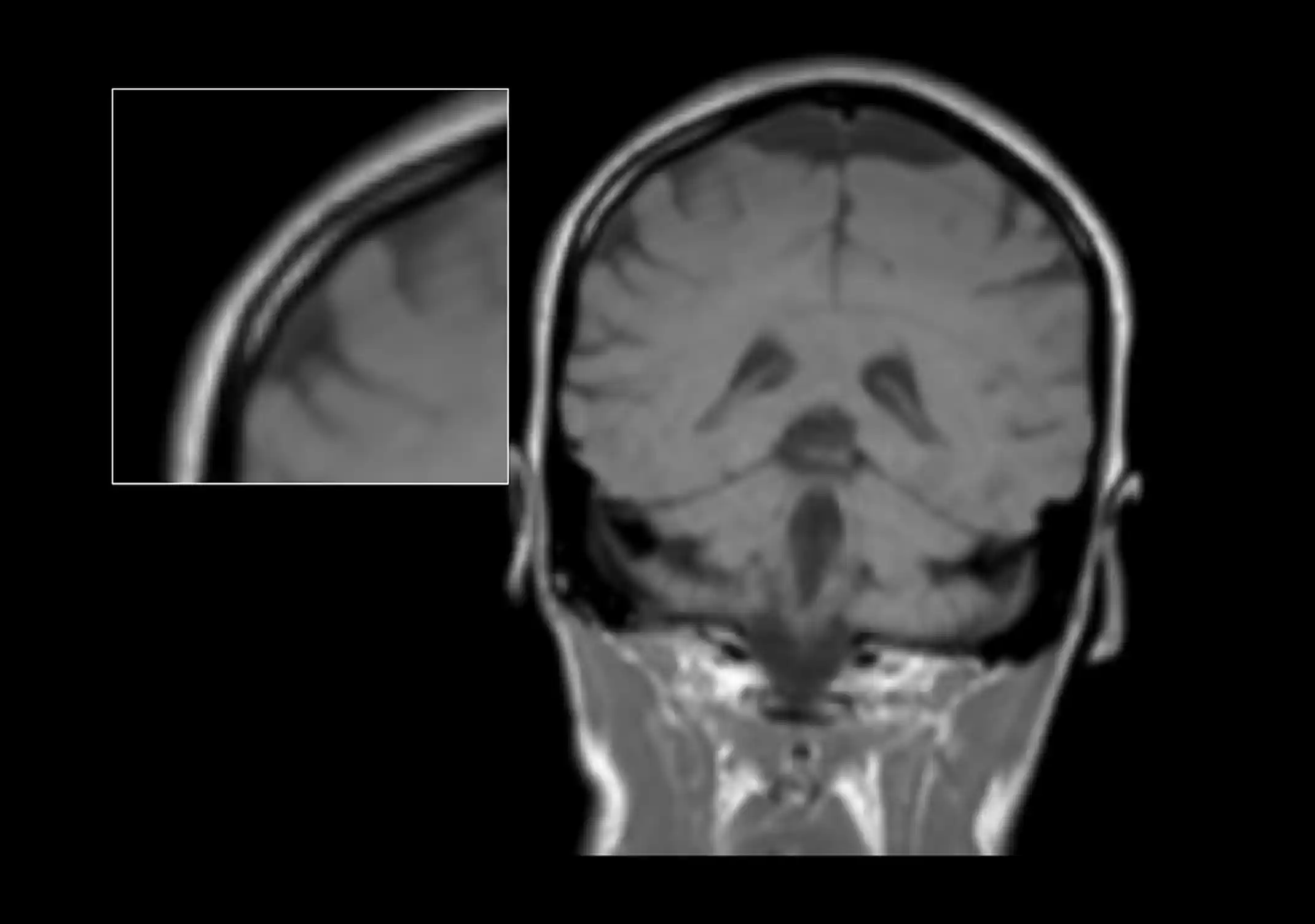
Curious how Prenuvo measures up to other popular MRI providers?
Through advanced protocols, high-resolution capture, and carefully tuned contrast techniques, our scans are designed to reveal detail with exceptional consistency from head to toe. In practice, this can mean greater clarity, more uniform coverage, and improved visibility into subtle findings. These are important differences that become especially meaningful when evaluating whole-body health. Because not all MRI approaches are the same, we’ve focused on raising the standard for what a comprehensive scan should deliver

Prenuvo image

Competitor image
Prenuvo image

Competitor image
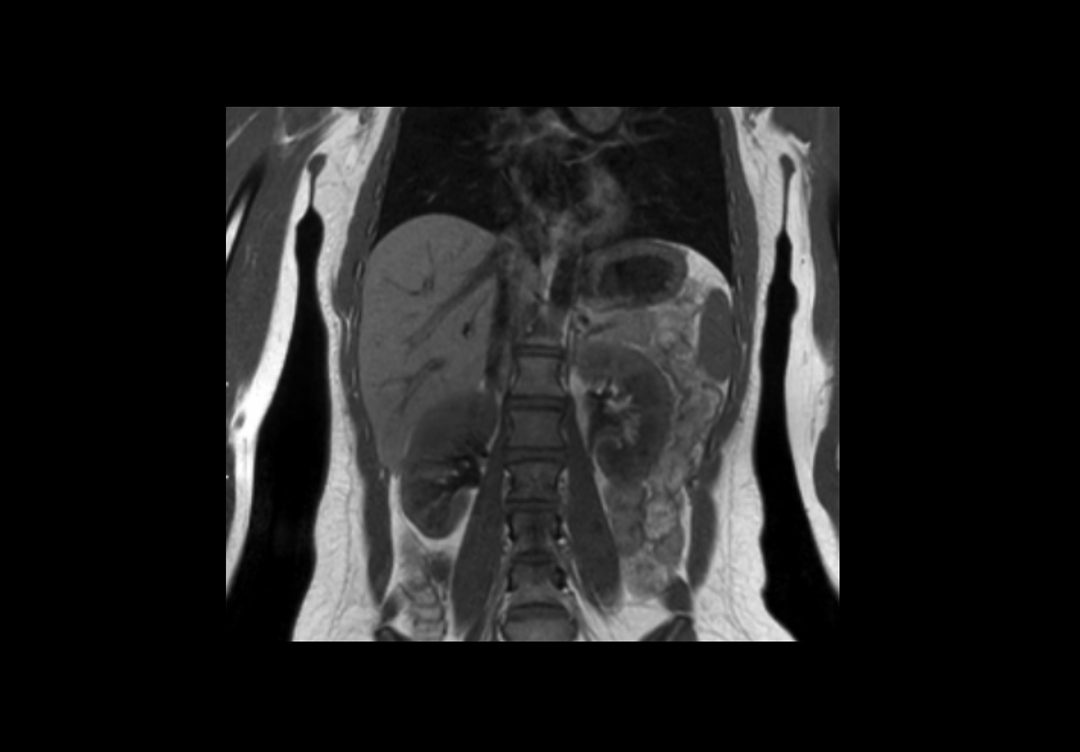
Prenuvo image

Competitor image

Prenuvo image

Competitor image


Questions to ask any provider before you book
Does your protocol comply with ONCO-RADS criteria?
What is the total scan time for this tier, and what anatomy is included — and excluded?
How much experience does the interpreting radiologist have in whole-body screening?
Has your protocol been validated in a peer-reviewed publication? Can you provide a citation?
Does your organization also operate the CT, PET, or follow-up imaging services that an abnormal finding would trigger? (This is a clear self-referral risk that could lead to unnecessary follow-up imaging.)
What structured reporting framework do you use (ONCO-RADS, CSD and others)?
What percentage of your patients receive findings requiring follow-up, and what percentage are ultimately clinically significant?
Who is the medical director, and what are their radiology credentials?
If I scan every year, will my scans be read with year-over-year comparison?
Even if you're relatively young and don't expect to see much in the scans , if you have the resources, I think it's a good investment because you'll have a baseline scan with which to compare to future MRI scans.


Every dimension on this page can be verified. Call us. Ask us.
Ask our competitors. The answer to who cares most about delivering a high-quality whole-body examination will become very clear, very fast.